Asian Finance Chiefs Warn of Global Economic Rifts from Trade Barriers


Social News
Asian Finance Chiefs Warn of Global Economic Rifts from Trade Barriers

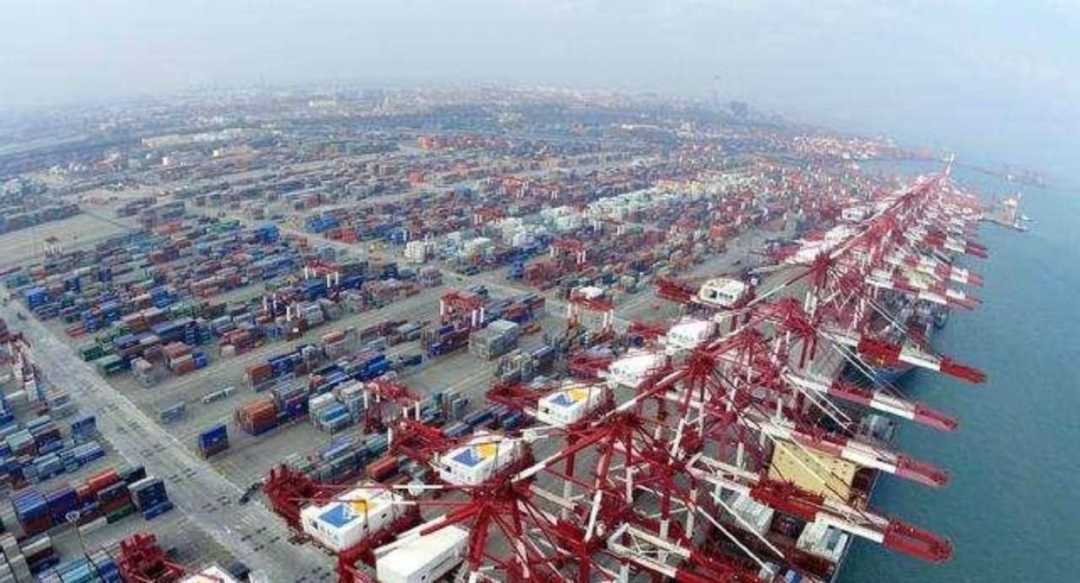
The finance ministers and central bank governors of Asian countries have sounded the alarm over the potential for trade barriers to fracture the global economy in a joint statement following the 28th ASEAN+3 Finance Ministers and Central Bank Governors Meeting. The meeting, held in Milan, Italy, addressed global and regional macroeconomic situations and financial cooperation within the region.


The joint statement reads, "Escalating trade protectionism will become a heavy burden on global trade, leading to economic fragmentation and affecting trade, investment, and capital flows across the region." Although the statement did not explicitly name any country, the backdrop is set against recent tariff hikes by the US, such as the announcement by US President Trump last month of new tariffs on almost all countries globally, with particularly high rates of 49%, 48%, and 46% imposed on Cambodia, Laos, and Vietnam respectively.


In the statement, Asian finance chiefs also called for "strengthening regional unity and cooperation to grapple with the increasing uncertainties." They emphasized that their current policy focus is to enhance long-term resilience while maintaining flexibility in the face of challenges like rising protectionism and an unstable global financial situation. Additionally, they reaffirmed their commitment to a rules - based, non - discriminatory, free, fair, open, inclusive, equal, and transparent multilateral trading system centered around the World Trade Organization (WTO). This collective stance by Asian countries signals a significant concern over the current global trade environment and an intention to safeguard the existing multilateral trading order.

Latest Stories
Sports News1 minute readItalian prosecutors are investigating alleged corruption in construction tenders linked to the country’s upcoming Winter Olympics. The Olympic Village is a key focus, with raids, arrests, and cash seizures sparking public concern—less than seven months before the Games open.
Feline News1 minute readIn the sun-kissed landscapes of California, a feline breed stands out for its striking appearance and unique legacy – the California Spangled Cat. Developed in the 1980s by Paul Casey, a Hollywood scriptwriter and cat enthusiast, this breed was crafted to resemble wild cats like leopards, aiming to raise awareness about endangered big cats while offering a domestic companion with a wild allure.
Cultural News1 minute readThe world’s largest padlock, certified by Guinness World Records, was crafted by 师生 from Russia’s Pavlovo Art College. It measures 56.8 inches in height, 41.3 inches in width, and 10.2 inches in thickness, with its key included in the total weight of 916 pounds.
Sports News1 minute readSports emerged as a key focus at the 4th International Development Finance Conference, where International Olympic Committee (IOC) Member HRH Prince Feisal Al Hussein emphasized that sports are far more than a form of entertainment—they act as a powerful tool for economic and social transformation.
Feline News1 minute readIn recent days, a cat named Marguerite has quietly risen to fame in a suburban community. The 3-year-old orange-and-white feline, once a street stray, has now become a "heartwarming bond" connecting neighbors.
Entertainment News1 minute readSalma Hayek’s journey to becoming a global beauty began with small, intentional touches—her grandmother tended to her eyelashes and hair from childhood, nurturing the allure that would later define her. She left college to pursue acting, a bold choice that set her on a path to stardom.
Industry News1 minute readForeign media reported on July 15 that the European Commission has formally withdrawn its plan to impose a digital tax on major tech companies during the latest budget negotiations. The decision is seen as a key compromise in EU-U.S. trade talks, temporarily relieving U.S. tech giants like Apple and Meta from heavy tax pressures, while the EU paves the way for broader trade agreements by adjusting its fiscal strategy.