The Dragon Head Caterpillar: Nature’s Dramatic Mimic with a Widespread Surprise


Insect Information
The Dragon Head Caterpillar: Nature’s Dramatic Mimic with a Widespread Surprise

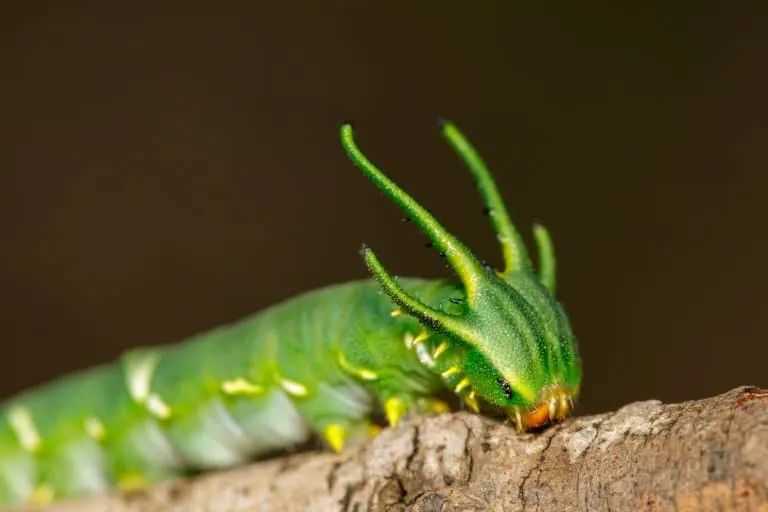
Renowned for its horned "head capsule"—a specialized thoracic segment that resembles a dragon’s face—the dragon head caterpillar may look otherworldly, but it thrives across North America and Eurasia. Belonging to the sphinx moth family (Sphingidae), this larva uses its striking appearance as a masterclass in predator deterrence, proving that dramatic adaptations often evolve in common species.

A False Head and Survival Theater

The caterpillar’s most iconic trait is a bulbous, eye-spotted anterior segment that inflates into a "dragon head" when threatened. Rearing up, it reveals bold yellow or orange patterns, waving its actual (smaller) head beneath to confuse birds. This automimicry diverts attacks from vital areas, while its green/brown body with diagonal white stripes offers camouflage among leaves.


Species like Ceratomia amyntor (hickory horned devil) or Manduca quinquemaculata (tomato hornworm) exemplify this trait, though younger instars display the most pronounced "dragon head." Growing to 8 cm, it feeds on tomatoes, tobacco, and trees, thriving in gardens, forests, and farmlands.

Common Yet Misunderstood

Despite its fearsome look, the caterpillar is harmless to humans—lacking stingers or venom—and plays a vital role as prey for parasitic wasps and birds. Its abundance highlights a biological paradox: spectacular traits often evolve in widespread species to maximize survival. As it pupates into an unassuming moth, this larva reminds us that nature’s most dramatic designs often hide in plain sight.

Latest Stories
Feline News1 minute readThe Cheetoh cat, a relatively new and increasingly popular feline breed, has been turning heads in the pet world with its striking appearance and engaging personality. Developed in the early 2000s through the intentional crossbreeding of Bengal cats and Ocicats, the Cheetoh was crafted to combine the exotic spotted coat of wild felines with the gentle temperament of domesticated breeds.
Cultural News1 minute readOn March 17 each year, Chicago’s Chicago River is dyed green to celebrate St. Patrick’s Day, while New York’s Fifth Avenue hosts grand parades. People worldwide don green clothing, shoes, bags, or hats—all part of the festive tradition.
Beauty News2 minute readRome-based amateur model Sofia Romano, 28, takes center stage in Issue 177, with a series of posed yet natural photos capturing her in the Eternal City’s everyday scenes. Shot by local photographer Marco Bellini, the collection features Romano in carefully crafted poses—on her apartment balcony draped with bougainvillea, outside a centuries-old bookstore, and amid the vibrant stalls of Campo de’ Fiori market—each frame blending intentionality with the city’s timeless charm.
Beauty News1 minute readVienna-based amateur model Lina Weiss, 30, stars in Issue 176 with a series of posed photos that blend everyday life with subtle styling. Shot by photographer Leo Braun, the collection captures Weiss in her favorite local spots—from her backyard garden to a historic bakery and her apartment’s kitchen—each pose carefully arranged to feel natural, not forced.
Social News1 minute readIn March 2019, to celebrate its 125th anniversary, New Orleans’ Roosevelt Hotel launched a unique promotion: a prize package worth $15,000, including seven nights in a presidential suite, a private dinner, and spa treatments. The catch? It was only awarded to whoever returned the "most outrageous item" ever stolen from the hotel.
Industry News1 minute readAmazon-owned live streaming platform Twitch is planning a full withdrawal from the Russian market, citing concerns over economic viability and mounting regulatory pressures, according to recent reports.
Feline News1 minute readAmidst the azure waters of Greece's Aegean archipelago, a feline species perfectly intertwined with the local landscape has emerged as both a natural and cultural icon—the Aegean cat. As Greece's only internationally recognized native cat breed, their history stretches back millennia, deeply intertwined with the fishing communities of the Cyclades Islands.