The Rainbow Grasshopper: A Vibrant Jewel of North America's Arid Plains


Insect Information
The Rainbow Grasshopper: A Vibrant Jewel of North America's Arid Plains

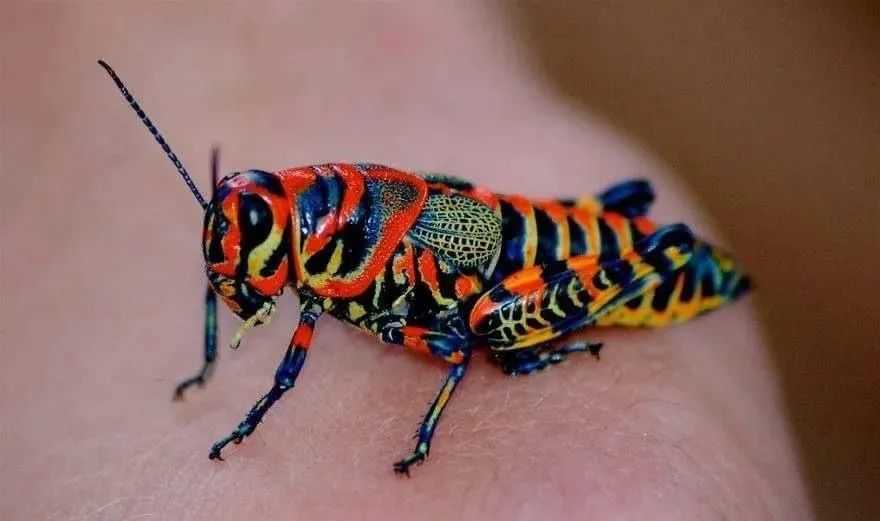
Native to the arid grasslands and sparse shortgrass habitats of North America, the rainbow grasshopper (Dactylotum bicolor) dazzles with its striking array of hues, defying the muted tones of its dry, sun-baked environment. This medium-sized orthopteran, also known as the painted grasshopper, showcases a vivid palette of red, orange, yellow, blue, and purple on its abdomen, legs, and wings, making it one of the most colorful insects in the region.


The grasshopper's bold coloration serves as a warning to predators: its body contains toxic compounds derived from the plants it consumes, particularly species of locoweed. This aposematic adaptation signals its unpalatability to birds and other predators, who learn to avoid the bright patterns after a single unpleasant encounter. When threatened, the grasshopper may also spread its wings to reveal even more vibrant undersides or emit a pungent odor, further deterring attackers.


Primarily found in the Great Plains and southwestern United States, the rainbow grasshopper thrives in open, dry landscapes with sparse vegetation. Its life cycle is tied to the availability of host plants, and while it can occasionally form small groups, it does not exhibit the swarming behavior of locusts. Despite its eye-catching appearance, this grasshopper plays a crucial role in its ecosystem as both a herbivore and a food source for predators that have adapted to tolerate its toxins. As climate change shifts arid habitats, the rainbow grasshopper remains a symbol of nature’s ability to paint even the harshest environments with bursts of life and color.

Latest Stories
Sports News1 minute readThe IOC has reportedly cooled India’s enthusiasm for hosting the 2036 Summer Olympics, highlighting three key obstacles: governance issues, doping problems, and underwhelming competitive performance, according to The Indian Express. These concerns were shared during a recent meeting in Lausanne with an Indian delegation led by IOA President PT Usha and Gujarat Sports Minister Harsh Sanghvi.
Industry News1 minute readJune 25 - Indonesia is planning to introduce a new regulation that will require e-commerce platforms such as TikTok Shop, Shopee, and Lazada to withhold 0.5% sales tax from small and medium-sized sellers with annual turnover ranging from 500 million to 4.8 billion Indonesian rupiah (approximately 30,000 to 300,000 US dollars). The move aims to alleviate the country's weak tax revenue and balance competition between physical stores and e-commerce businesses.
Entertainment News1 minute readAmber Heard, an American actress, has long been admired for her striking looks and magnetic presence, often hailed as one of the most beautiful women in the world. Her allure extends beyond conventional standards, earning her a place as a beloved figure among younger audiences.
Industry News1 minute readThe global toy market is poised for steady growth, projected to rise from $316.14 billion in 2024 to $445.97 billion by 2032, at a compound annual growth rate (CAGR) of 4.33%, according to latest insights.
Feline News1 minute read[Nashville, July 18th] —— The Tennessee Rex, a uniquely American cat breed celebrated for its naturally curly fur, is gaining recognition among pet enthusiasts worldwide. This distinctive feline traces its origins to a chance discovery in 2004 in Tennessee, where a stray cat gave birth to a litter containing a kitten with unusually soft, curly hair—a natural genetic mutation that marked the breed's beginning.
Entertainment News1 minute readGlen Powell, born October 21, 1988, in Austin, Texas, has evolved from a versatile character actor to a leading man, blending charm, wit, and intensity across genres.
Industry News1 minute readThe U.S. Department of Commerce announced on July 14 that the Trump administration has initiated an investigation into imports of drones and polysilicon—a semiconductor material—to assess their impact on U.S. national security. The Section 232 probe, which began quietly on July 1 without public disclosure, could pave the way for higher tariffs on these imports.