Fairyflies: The World's Tiniest Insects with a Mighty Role in Pest Control


Insect Information
Fairyflies: The World's Tiniest Insects with a Mighty Role in Pest Control

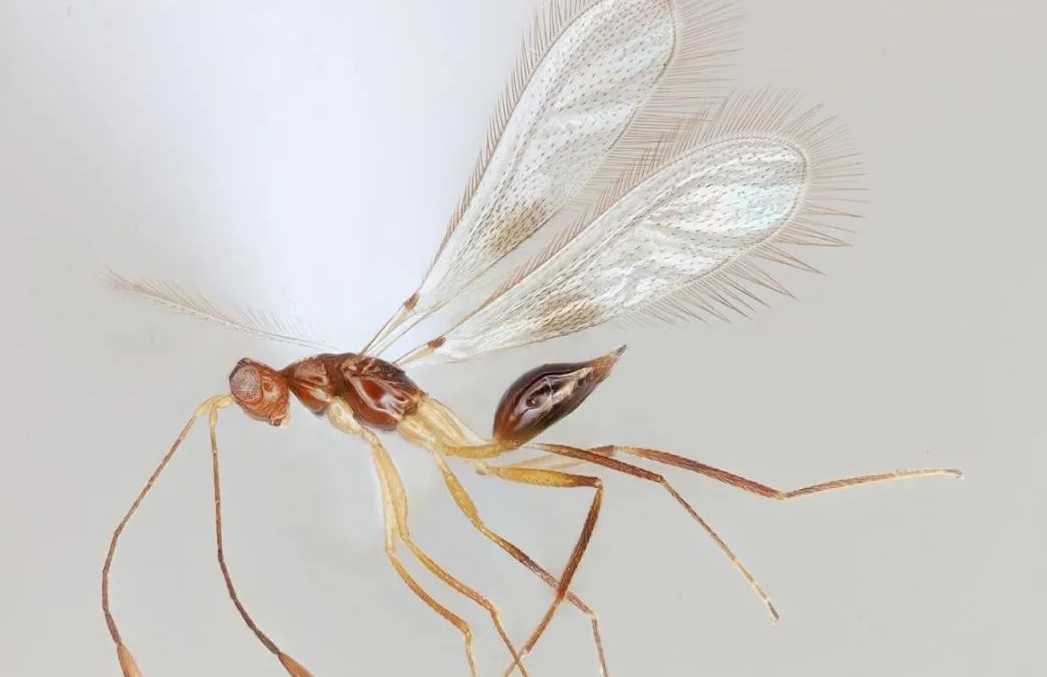
Fairyflies, belonging to the family Mymaridae, hold the title of some of the smallest insects on Earth, measuring a mere 0.2 millimeters in length. These minuscule flyers, smaller than the eye can easily perceive, have evolved an extraordinary lifestyle as parasitic wasps, specializing in a unique ecological niche that benefits both nature and agriculture.

Their diminutive size belies a powerful survival strategy: fairyflies primarily feed on the eggs of other insects, with a particular preference for thrips—tiny pests that ravage crops worldwide. Using their specialized ovipositors, female fairyflies penetrate thrip egg masses, laying their own eggs inside. As fairyfly larvae develop, they consume the thrip eggs from within, effectively eliminating future generations of pests. This parasitic behavior makes them natural allies in biological control, as they target thrips without harming plants, humans, or beneficial insects.


In agricultural settings, fairyflies have become invaluable tools. By introducing these tiny wasps, farmers can reduce reliance on chemical pesticides, offering a sustainable and eco-friendly approach to pest management. Their ability to reproduce rapidly and target specific hosts has made them a cornerstone of integrated pest management programs globally. Despite their microscopic stature, fairyflies demonstrate how even the smallest creatures can play a monumental role in balancing ecosystems and safeguarding food crops.

Latest Stories
Sports News1 minute readItalian prosecutors are investigating alleged corruption in construction tenders linked to the country’s upcoming Winter Olympics. The Olympic Village is a key focus, with raids, arrests, and cash seizures sparking public concern—less than seven months before the Games open.
Feline News1 minute readIn the sun-kissed landscapes of California, a feline breed stands out for its striking appearance and unique legacy – the California Spangled Cat. Developed in the 1980s by Paul Casey, a Hollywood scriptwriter and cat enthusiast, this breed was crafted to resemble wild cats like leopards, aiming to raise awareness about endangered big cats while offering a domestic companion with a wild allure.
Cultural News1 minute readThe world’s largest padlock, certified by Guinness World Records, was crafted by 师生 from Russia’s Pavlovo Art College. It measures 56.8 inches in height, 41.3 inches in width, and 10.2 inches in thickness, with its key included in the total weight of 916 pounds.
Sports News1 minute readSports emerged as a key focus at the 4th International Development Finance Conference, where International Olympic Committee (IOC) Member HRH Prince Feisal Al Hussein emphasized that sports are far more than a form of entertainment—they act as a powerful tool for economic and social transformation.
Feline News1 minute readIn recent days, a cat named Marguerite has quietly risen to fame in a suburban community. The 3-year-old orange-and-white feline, once a street stray, has now become a "heartwarming bond" connecting neighbors.
Entertainment News1 minute readSalma Hayek’s journey to becoming a global beauty began with small, intentional touches—her grandmother tended to her eyelashes and hair from childhood, nurturing the allure that would later define her. She left college to pursue acting, a bold choice that set her on a path to stardom.
Industry News1 minute readForeign media reported on July 15 that the European Commission has formally withdrawn its plan to impose a digital tax on major tech companies during the latest budget negotiations. The decision is seen as a key compromise in EU-U.S. trade talks, temporarily relieving U.S. tech giants like Apple and Meta from heavy tax pressures, while the EU paves the way for broader trade agreements by adjusting its fiscal strategy.