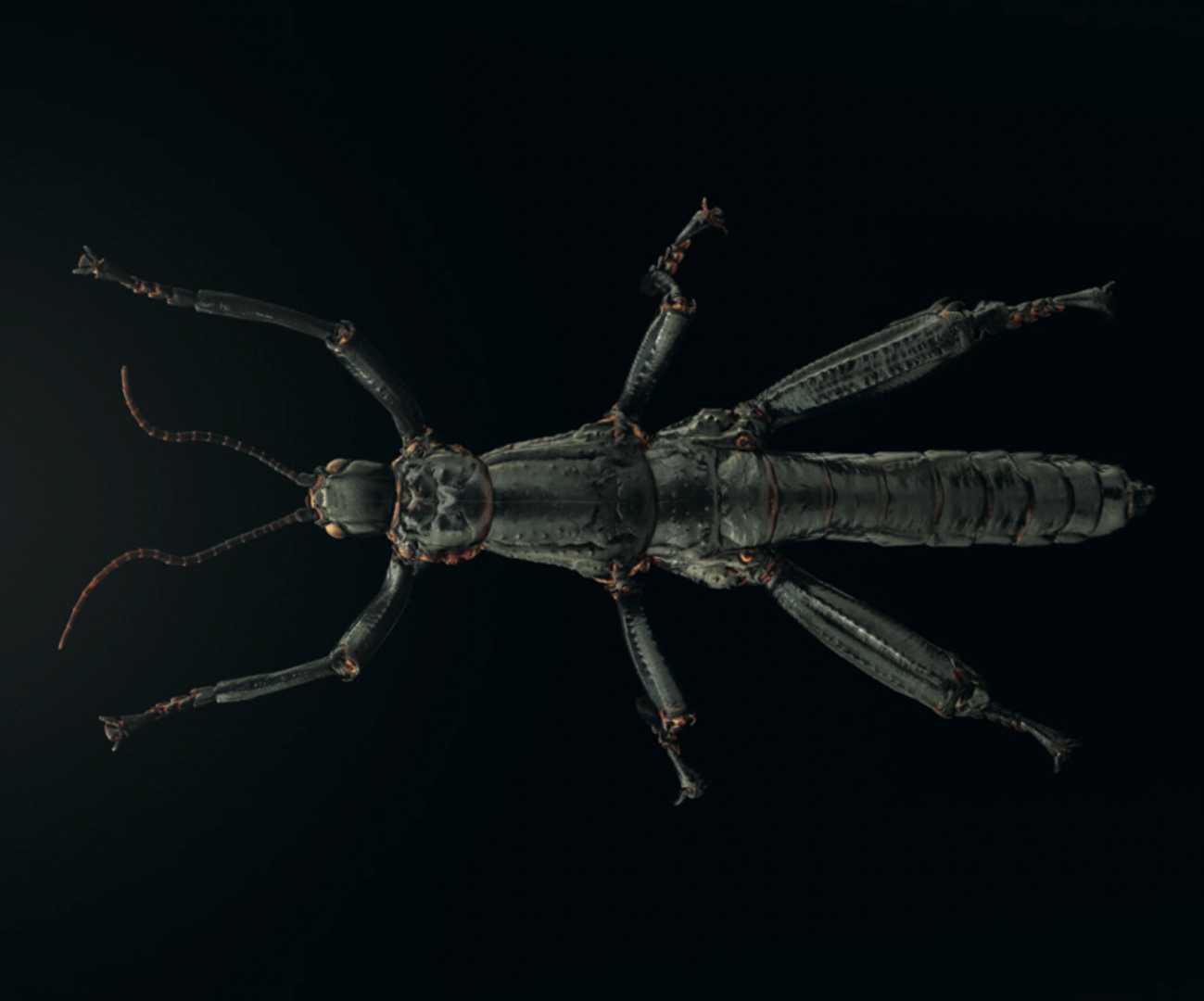
The Lord Howe Island stick insect, scientifically known as Dryococelus australis, is a remarkable insect that has captured the attention of the scientific community and nature enthusiasts alike. This species, often referred to as the "land lobster" due to its large size and robust appearance, has a unique and compelling story of near - extinction and subsequent rediscovery.
Once thought to be extinct, the Lord Howe Island stick insect was last seen on its namesake island in 1920. The introduction of black rats to Lord Howe Island in 1918, likely via shipwrecks, had a devastating impact on the local ecosystem. These invasive rodents preyed on the stick insects, leading to their presumed disappearance. However, in 2001, a small population of these insects was astonishingly rediscovered on Ball's Pyramid, a volcanic rock located about 23 kilometers southeast of Lord Howe Island.
The Lord Howe Island stick insect is an impressive creature. Adults can reach lengths of up to 15 centimeters, making them one of the largest stick insects in the world. They have a shiny, black exoskeleton and a somewhat stocky build, lacking wings. Their bodies are well - adapted for their environment, with strong legs that allow them to navigate the rocky terrain where they live. Females are generally larger than males.
In terms of reproduction, these stick insects lay eggs in a rather unique way. They use their ovipositors to dig holes in the soil, where they deposit their eggs. The eggs are cylindrical and lack the "false head" structures that some other stick insect eggs have. After an incubation period, the nymphs hatch and begin their growth process, molting several times as they develop into adults.
The rediscovery of the Lord Howe Island stick insect has spurred conservation efforts. Scientists are working to protect the remaining population on Ball's Pyramid and also attempting to breed them in captivity. In 2003, a breeding program was established at Melbourne Zoo, and since then, other institutions have joined in this effort. The goal is not only to increase the population numbers but also to potentially reintroduce them to Lord Howe Island once the rat problem has been eradicated. This would help restore the ecological balance on the island, as the stick insects play an important role in the local food chain, being both a prey item for some species and a consumer of plant material. Their return to Lord Howe Island would be a significant victory for conservation, symbolizing the resilience of nature and the importance of protecting endangered species.